Archive
#Microsoft launches its #Azure #Hadoop service! – via @maryjofoley
This is really cool!
Microsoft’s cloud-based distribution of Hadoop — which it has been developing for the past year-plus with Hortonworks — is generally available as of October 28.
Microsoft officials also are acknowledging publicly that Microsoft has dropped plans to deliver a Microsoft-Hortonworks developed implementation of Windows Server, which was known as HDInsight Server for Windows. Instead, Microsoft will be advising customers who want Hadoop on Windows Server to go with Hortonworks Data Platform (HDP) for Windows.
Windows Azure HDInsight is “100 percent Apache Hadoop” and builds on top of HDP. HDInsight includes full compatibility with Apache Hadoop, as well as integration with Microsoft’s own business-intelligence tools, such as Excel, SQL Server and PowerBI.
“Our vision is how do we bring big data to a billion people,” said Eron Kelly, Microsoft’s SQL Server General Manager. “We want to make the data and insights accessible to everyone.”
Making the Hadoop big-data framework available in the cloud, so that users can spin up and spin down Hadoop clusters when needed is one way Microsoft intends to meet this goal, Kelly said.
Microsoft and Hortonworks originally announced plans to bring the Hadoop big-data framework to Windows Server and Windows Azure in the fall of 2011. Microsoft made a first public preview of its Hadoop on Windows Server product (known officially as HDInsight Server for Windows) available in October 2012.
Microsoft made available its first public preview of its Hadoop on Windows Azure service, known as HDInsight Service, on March 18. Before that…
Continue reading here!
//Richard
#Gartner Outlines 10 IT Trends To Watch – via @MichealRoth, #Nutanix, #VMWare
This is also a good analysis I must say, I think that they are spot on! Even though I think that most companies haven’t addressed the whole Mobility aspect of going away from “managing devices” yet, there are a lot of “BYOD” strategies and solutions that companies still need to work on….
And of course I see a great opportunity to transform and build new “cloud” services/datacenters as well and do it in a more up-to-date, agile, scalable and simple way than what we’ve done over all these years. Stop building the old legacy architecture of Compure, Network and Storage and see what the market leaders of IaaS and PaaS are doing. One of the great players here is of course Nutanix as I see it (contact EnvokeIT if you need more info about this great product)!
Gartner Inc. offered a glimpse of 10 trends for IT professionals to pay attention to over the next five years.
The trends were discussed in a Thursday Webinar by David J. Cappuccio, a research vice president at Gartner. He noted that IT pros are busy enough with daily operations, with “74 percent” of IT budgets devoted to those concerns. Still, he contended that there are lots of new technologies and trends that will have an impact on IT departments.
Gartner expects these trends will affect IT over the next five years:
- “Software-defined networks
- “Software-defined storage
- “Hybrid cloud services
- “Integrated systems
- “Applications acceleration
- “The Internet of things
- “Open Compute Project
- “Intelligent datacenters
- “IT demand
- “Organizational entrenchment and disruptions”
End user expectations are affecting IT. New workers getting out of college are expecting access to everything all of the time, from any device, from anywhere, Cappuccio said. They typically own between three and four devices today, he added.
Software-defined networking (SDN) came into general awareness about two years ago, expecially after SDN pioneer Nicira came out of stealth mode, Cappuccio said. Nicira’s idea was to create a software stack that would manage the real-world physical network. The concept resonated well with the marketplace, and Nicira was bought by VMware in a $1.4 billion purchase. SDN represents a new way to operate networks, which can be configured…
Continue reading here!
//Richard
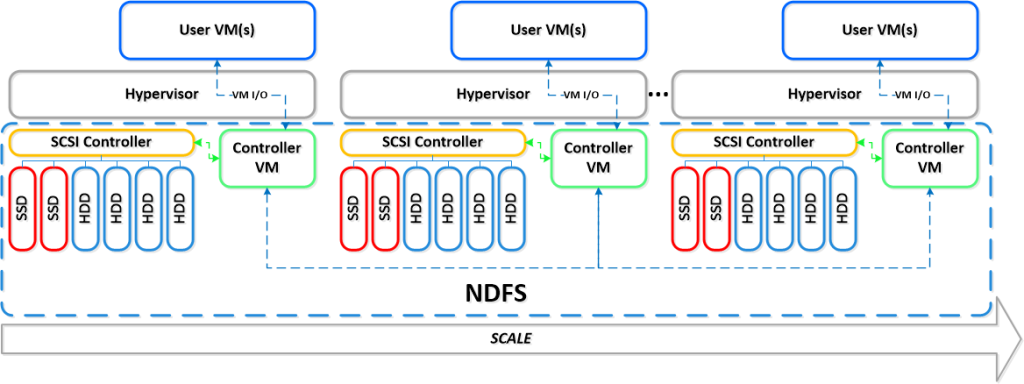
How to pick virtualization (HW, NW, Storage) solution for your #VDI environment? – #Nutanix, @StevenPoitras
Here we are again… a lot of companies and Solution Architects are scratching their heads thinking about how we’re going to do it “this time”.
Most of you out there have something today, probably running XenApp on your VMware or XenServer hypervisor with a FC SAN or something, perhaps provisioned using PVS or just managed individually. There is also most likely a “problem” with talking to the Storage team that manage the storage service for the IaaS service that isn’t built for the type of workloads that XenApp and XenDesktop (VDI) requires.
So how are you going to do it this time? Are you going to challenge the Storage and Server/IaaS service and be innovative and review the new cooler products and capabilities that now exists out there? They are totally changing the way that we build Virtual Cloud Computing solutions where; business agility, simplicity, cost savings, performance and simple scale out is important!
There is no one solution for everything… but I’m getting more and more impressed by some of the “new” players on the market when it comes to providing simple and yet so powerful and performing Virtual Cloud Computing products. One in particular is Nutanix that EnvokeIT has partnered with and they have a truly stunning product.
But as many have written in many great blog posts about choosing your storage solution for your VDI solution you truly need to understand what your service will require from the underlying dependency services. And is it really worth to do it the old way? You have your team that manages the IaaS service, and most of the times it just provides a way for ordering/provisioning VM’s, then the “VDI” team leverages that one using PVS or MCS. Some companies are not even where they can order that VM as a service or provision it from the Image Provisioning (PVS/MCS) service, everything is manual and they call it a IaaS service… is it then a real IaaS service? My answer would be now… but let’s get back to the point I was trying to make!
This HW, Hypervisor, Network, Storage (and sometimes orchestrator) components are often managed by different teams. Each team are also most of the times not really up to date in terms of understanding what a Virtualization/VDI service will require from them and their components. They are very competent in understanding the traditional workload of running a web server VM or similar, but not really dealing with boot storms from hundreds to thousands of VDI’s booting up, people logging in at the same time and the whole pattern of IOPS that is generated in these VM’s “life-cycle”.
This is where I’d suggest everyone to challenge their traditional view on building Virtualization and Storage services for running Hosted Shared Desktop (XenApp/RDS) and Hosted Virtual Desktop (VDI/XenDesktop) on!
You can reduce the complexity, reduce your operational costs and integrate Nutanix as a real power compute part of your internal/private cloud service!
One thing that also is kind of cool is the integration possibilities of the Nutanix product with OpenStack and other cloud management products through its REST API’s. And it supports running both Hyper-V, VMware ESXi and KVM as hypervisors in this lovely bundled product.
If you want the nitty gritty details about this product I highly recommend that you read the Nutanix Bible post by Steven Poitras here.

Microsoft is progressing quickly! – SkyDrive Pro updated to 25GB and improved sharing – via @BasvanKaam
I must say this once again, Microsoft looks to be on the right track when it comes to getting back as one strong supplier of services in the future/present “BYOD” world. As I wrote in my post #Microsoft – On the right track! – #Windows, #BYOD, #Citrix now Microsoft is actually targeting to solve many of the gaps that we see with today services for BYOx scenarios. For instance how to manage what you want on top of the device (Azure, Intune, SkyDrive, Work Folders etc…) in a controllable fashion and not a full managed device that costs you a fortune to manage… and ShareFile, Box and others are great solutions that have many features that SkyDrive doesn’t have. But there is one thing that they all lack (or please enlighten me!!):
Encryption at rest on Windows, OS X and Linux OS’s/distributions, here all providers are leaning on that you already have hard drive encryption like BitLocker etc. But who manages that then? Can you then say that your service is “BYOD-compliant”? I wouldn’t say so… It’s not only SmartPhones and Tablet devices that we loose… but here Microsoft and SkyDrive may be the first to come with encryption on at least Windows 8.1 devices and somewhat manageable…
But again back to the announcement from Microsoft and SkyDrive:
Microsoft announced today that it is giving business users more storage space and a better way to share files across multiple devices. As first reported by TechCrunch, through its SkyDrive Pro accounts, employees will now receive 25GB of storage to start out with, a sharp increase from 7GB — and even this capacity can be increased to 50GB or even 100GB. Additionally, using SkyDrive’s Shared with Me view, users can share files with their friends and co-workers securely and in real-time.
According to Microsoft Senior Product Managers Mark Kashman and Tejas Mehta, the new storage space limits will be available for both new and existing customers.
This certainly makes the service standout among its competitors, namely Dropbox and Box. It was only about a week or so ago when the latter heralded in the launch of a new pricing plan aiming to increase the number of small businesses using its service. For personal users, Box also wound up doubling the amount of free storage they received.
Here’s how you can figure out the overall storage for each user:
With Office 365, you get 25 GB of SkyDrive Pro storage + 25 GB of email storage + 5 GB for each site mailbox you create + your total available tenant storage, which for every Office 365 business customer starts at 10 GB + (500 MB x # of user(s)1).
While Dropbox, Box, and Hightail certainly are some of the popular services out there today, SkyDrive isn’t something to be trifled with either. Through its integration with the Surface, Windows Phone, and other Microsoft products, along with iOS and Android devices, it has the potential to be a very powerful service.
As for the new sharing feature, just like you would perhaps see in Google Drive or any other cloud storage service, SkyDrive Pro is now offering a Shared with Me view that lets you take a shared document and view, edit, re-share, download, and more — all as if it were in your own storage bin.

But Microsoft isn’t stopping there, as it is adding several minor, but interesting enhancements to SkyDrive. The company has also increased the overall file upload limit to its SharePoint Online service to 2GB per file. Files placed into the recycle bin will now remain…
Continue reading here!
//Richard
Remote Desktop Services are now allowed on #Windows #Azure – #RDS, #TS, #XenDesktop
This is a great thing that you should have a look at and investigate how it would fit you and your organization! Finally Microsoft has changed the license model! They still have some work to be done on it though so we can run Virtual Desktops (VDI’s) as well!! 😉
Read this great blog post from lpanzano:
I’ve not seen a lot of news about this so I thought it was worth writing a short post just to remember everyone that on July 1st, Microsoft has officially changed Windows Azure licensing terms (PUR) to allow the use of Remote Desktop Services (RDS) on Windows Azure Virtual Machines. Previously this scenario was not allowed in Windows Azure. Before July 1st you could only access an Azure Windows Server VM for purpose of server administration or maintenance (up to 2 simultaneous sessions are authorized for this service).
Let’s see some details about this change:
-
To enable more than 2 simultaneous sessions you will need to purchase RDS Subscriber Access Licenses (SALs) through the Microsoft Services Provider Licensing Agreement (SPLA) for each user or device that will access your solution on Windows Azure. SPLA is separate from an Azure agreement and is contracted through an authorized SPLA reseller. Click here for more information about SPLA benefits and requirements.
-
RDS Client Access Licenses (CALs) purchased from Microsoft VL programs such as EA, do not get license mobility to shared cloud platforms, hence they cannot be used on Azure.
-
Windows ‘Client’ OS (e.g. Windows 8) virtual desktops, or VDI deployments, will continue to not be allowed on Azure, because Windows client OS product use rights prohibit such use on multi-tenant/shared cloud environments.
-
Customers can use 3rd party application hosting products that require RDS sessions functionality (e.g. Citrix XenDesktop), subject to product use terms set by those 3rd party providers, and provided these products leverage only RDS session-hosting (Terminal Services) functionality. Note that RDS SALs are still required when using these 3rd party products.
Continue reading this post here!
Citrix also created a good blog post on their view of the top 5 scenarios for putting XenDesktop on Azure:
Top 5 Scenarios for XenDesktop on Windows Azure
Since Windows Azure launched I have looked forward to the day Citrix would be able to work jointly with Microsoft to support XenDesktop and XenApp workloads. We are excited that today is the day we announce support for XenDesktop 7 and XenApp 6.5 on Windows Azure. Customers can now take advantage of the leading Citrix desktop virtualization solution and all of the HDX user experience goodness on Microsoft’s leading public cloud. With the announcement we’ve published two design guides (here andhere) to help get you started with your deployments.
Choose your #Citrix #NetScaler … wisely… – via @hlouwers
This is a question I get a lot and I must say that Henny Louwers did answer it well in this blog post!
I spend a lot of my time breaking down the different models of Citrix NetScaler appliances and different Software Editions within the Citrix NetScaler portfolio.
I decided to set up a blog about this since the path is usually pretty much (lengthy but) the same. This does not mean the answer is always easy because there are a lot of questions that need to be answered.
The first thing I would like to get off my chest is the following: Stop seeing/selling the Citrix NetScaler as a replacement for Secure Gateway. It is so much more than that. I often have discussions with various engineers and consultants telling me that Citrix NetScaler is so expensive for a Remote Access solution because Secure Gateway always used to be free. No offense but a Citrix NetScaler solution belongs to the networking department, not the Citrix XenApp sys admin department. Or maybe limited.
That leads me to the first difficult thing of a Citrix NetScaler project. The adoption of the Citrix NetScaler appliances to the networking guys of an organization. They need to embrace the solution to make this a success. For some reason they too see it as a ‘’Citrix’’ solution. For that reason one of the most important meetings to setup is usually with the networking guys to try to explain the L3-L7 functionality of the Citrix NetScaler solution. When they realize it competes with F5, Juniper, Cisco, etc then we are on the right track.
NetScaler Gateway or NetScaler Standard Edition
Usually the first question of a customer is regarding something simple like replacing the Remote Access solution. Since the NetScaler is going to be the main platform for publishing Citrix publications a NetScaler Gateway can be considered as a valid option. This is when I tell a customer it would be wise to spend a little extra on the NetScaler Standard Edition since this would leverage the solution be having full load balancing capabilities (among others). When you compare prices between the NetScaler Gateway and NetScaler Standard Edition you will see that the Standard Edition will be somewhat more expensive but I for one think that it is worth the difference given the feature set that come with the Standard Edition. Of course the NetScaler Gateway can always be upgraded to a NetScaler Standard Edition (or higher) if you will.
Another feature of Citrix NetScaler Standard Edition is the ability to run Citrix Web Interface on the appliance. Honestly, I do think is not really that important anymore….
Continue reading here!
//Richard
Hosting #Citrix Desktops from the #Amazon Cloud – #AWS, #BYOD, #DaaS, #NetScaler
A good blog post by Ken Oestreich.
That’s right. Run your XenApp on AWS and NetScaler on AWS .
Those capabilities has been around for a while, and over time Citrix has been working to make set-up and configuration even easier.
Whether you are a large enterprise, smaller business, or even a service provider, deploying on the AWS cloud could yield you many more benefits and operational advantages than you could get than deploying XenApp on your own equipment.
Is it for me?
It could be. If you answer “yes” to any of the following, you may want to look more closely:
- You’re Moving infrastructure to the cloud – if you wish to leverage the cloud to host infrastructure – either for convenience, cost, capital expense avoidance, availability, or other attributes.
- You’re Cost-conscious – Amazon’s EC2 cloud often provides customers with a significant reduction in hardware, networking and/or storage costs, particularly due to the pay-as-you-go nature of EC2 capacity. This helps avoid over-provisioning, and allows for real-time matching of capacity to demand.
- You don’t have a data center – Many customers chose to avoid building on-premesis data centers altogether while remaining staunch believers in Citrix software. These are small/medium businesses require agile – and often outsourced – infrastructure
- You have modest administration/deployment knowledge – Many customers prefer not to invest in the skills needed to maintain data center hardware, but insist on retaining application administration skills. Leveraging IaaS infrastructure in the cloud is the ideal approach whereby hardware configuration and maintenance is avoided.
- You have a dynamic business that needs to quickly react to change – Businesses with significant growth curves or seasonality often over-provision infrastructure for peak use, locking-up precious fixed capital that is frequently idle.
Tools, resources, economics
The Citrix community has made available Amazon CloudFormation scripts that greatly simplify configuration, set-up and operation of large-scale XenApp instances. We also have spent hours looking at the economics of running your Citrix infrastructure on AWS. These include
We also make it easy to use products/licenses on AWS…
Continue reading here!
//Richard
#Apache #CloudStack grows up – #Citrix, #IaaS – via @sjvn
On June 4th, the 4.1.0 release of the Apache CloudStack Infrastructure-as-a-Service (IaaS) cloud orchestration platform arrived. This is the first major CloudStack release since its March 20th graduation from the Apache Incubator.

It’s also the first major release of CloudStack since Citrix submitted the project to the Apache Foundation in 2012. Apache CloudStack is an integrated software platform that enables users to build a feature-rich IaaS. Apache claims that the new version includes an “intuitive user interface and rich API [application programming interface] for managing the compute, networking, accounting, and storage resources for private, hybrid, or public clouds.”
This release includes numerous new features and bug fixes from the 4.0.x cycle. It also includes major changes in the codebase to make CloudStack easier for developers; a new structure for creating RPM/Debian packages; and completes the changeover to using Maven, the Apache software project management tool.
Apache CloudStack 4.1.0’s most important new features are:
- An API discovery service that allows an end point to list its supported APIs and their details.
- Added an Events Framework to CloudStack to provide an “event bus” with publish, subscribe, and unsubscribe semantics. Includes a RabbitMQ plug-in that can interact with AMQP (Advanced Message Queuing Protocol) servers.
- Implement L3 router functionality for the VMware Nicira network virtualization platform (NVP) plug-in
- Support for Linux’s built-in Kernel-based Virtual Machine (KVM) virtualization with NVP L3 router
functionality. - Support for AWS (Amazon Web Service) style regions
What all this adds up to, according to CloudStack Project Management Committee (PMC) member Joe Brockmeier, is that today’s CloudStack is “a mature, stable project, [that] is also free as in beer and speech. We believe that if you’re going to be building an IaaS cloud for private or public consumption, you’ll be better served choosing an open platform that any organization can participate in and contribute to.”
Brockmeier concluded, “CloudStack is a very mature offering that’s relatively easy to deploy and manage, and it’s known to power some very large clouds–e.g., Zynga with tens of thousands of nodes–and very distributed clouds–such as DataPipe, which…
Continue reading here!
//Richard
#Microsoft finds a new way to deliver a private #cloud in a box – #Azure via @maryjofoley
Interesting!!!! 🙂
It took three years from when it was first announced, but Microsoft may have found a way to deliver a private cloud in a box.

The company’s vision and strategy for doing this has gone through many twists and turns.
Microsoft’s original plan was to provide its largest partners and even a few, select enterprise users a so-called Azure Appliance. Announced in 2010, the Azure Appliances were to be carried by Dell, Fujitsu and HP. These OEMs were to provide the servers which could be installed in partner and select enterprise customers’ datacenters. Microsoft was supposed to provide and maintain Windows Azure as a service to these servers.
The only partner that ever delivered an Azure Appliance was Fujitsu, which announced availability in August 2011. But some time in the past few months, Microsoft ended up dropping its Azure Appliance plans, without ever officially announcing it was dead.
#Windows #Azure Active Directory steps out of the shadows
I’ve blogged about this release before with some info but here is another good article about how it can assist you in managing user authentication in the cloud.
Microsoft recently announced the general availability of Windows Azure Active Directory, a cloud-based service that lets admins manage multiple user identities and access. Although it’s been lurking in the background of other Microsoft products for some time — and still requires work to make it a fully useful tool — it’s a step in the right direction.
At its core, Windows Azure Active Directory is essentially a copy of Active Directory held in the cloud that provides basic authorization and authentication when users access cloud services. Ideally, admins use it to centralize the database of authorized users for cloud services, which then lets them authorize employees and contractors to work in certain applications. This allowance includes both Microsoft and third-party applications that accept authentication through common industry standards.
Through synchronization with an on-premises Active Directory deployment, you can also deploy single sign-on, so users don’t have to remember multiple passwords or enter them more than once to access cloud applications. More importantly, it provides a better way to remove access to cloud services for users who have left the company — a previous weak link in the cloud identity management story.
Windows Azure Active Directory: Not exactly new
True to Microsoft’s history of dogfooding its own products, Windows Azure Active Directory had been in use for nearly a year before its current general release. Few actually knew that all Office 365 accounts have been using a preview release of Windows Azure Active Directory for some time. Users of the general Windows Azure service, Dynamics CRM andWindows Intune also have their details stored in private Windows Azure Active Directory accounts.
According to Microsoft, since just after the beginning of the 2013 calendar year, “Windows Azure AD has processed over 65 billion authentication requests while maintaining 99.97% or better monthly availability.” Windows Azure Active Directory is a distributed service running across 14 of Microsoft’s data centers all over the globe.
User interface improvements
One improvement that happened between the preview release of Windows Azure Active Directory and the Web version release is the user interface, which was basically nonexistent before. Now you can access a clean section of the modern-looking Windows Azure control panel to create and manage instances of Windows Azure Active Directory (Figure 1).

You can add these instances to your Windows Azure subscription by logging into your Microsoft account, which…
Continue reading here!
//Richard


 The IT Melting Pot!