Archive
How to pick virtualization (HW, NW, Storage) solution for your #VDI environment? – #Nutanix, @StevenPoitras
Here we are again… a lot of companies and Solution Architects are scratching their heads thinking about how we’re going to do it “this time”.
Most of you out there have something today, probably running XenApp on your VMware or XenServer hypervisor with a FC SAN or something, perhaps provisioned using PVS or just managed individually. There is also most likely a “problem” with talking to the Storage team that manage the storage service for the IaaS service that isn’t built for the type of workloads that XenApp and XenDesktop (VDI) requires.
So how are you going to do it this time? Are you going to challenge the Storage and Server/IaaS service and be innovative and review the new cooler products and capabilities that now exists out there? They are totally changing the way that we build Virtual Cloud Computing solutions where; business agility, simplicity, cost savings, performance and simple scale out is important!
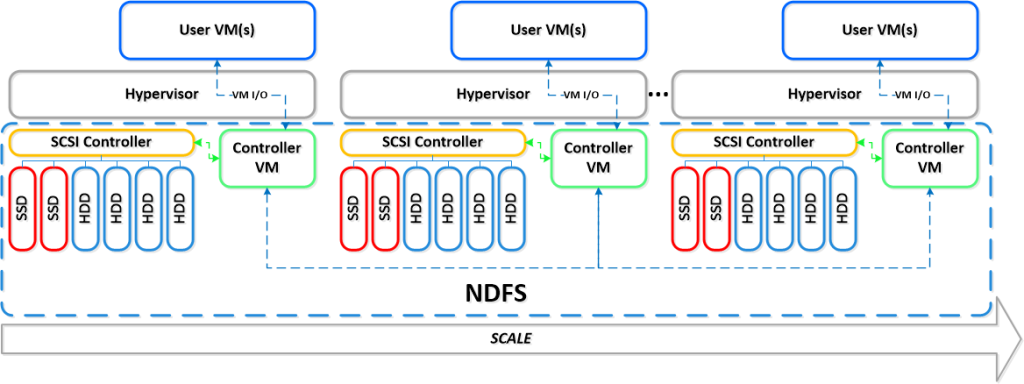
There is no one solution for everything… but I’m getting more and more impressed by some of the “new” players on the market when it comes to providing simple and yet so powerful and performing Virtual Cloud Computing products. One in particular is Nutanix that EnvokeIT has partnered with and they have a truly stunning product.
But as many have written in many great blog posts about choosing your storage solution for your VDI solution you truly need to understand what your service will require from the underlying dependency services. And is it really worth to do it the old way? You have your team that manages the IaaS service, and most of the times it just provides a way for ordering/provisioning VM’s, then the “VDI” team leverages that one using PVS or MCS. Some companies are not even where they can order that VM as a service or provision it from the Image Provisioning (PVS/MCS) service, everything is manual and they call it a IaaS service… is it then a real IaaS service? My answer would be now… but let’s get back to the point I was trying to make!
This HW, Hypervisor, Network, Storage (and sometimes orchestrator) components are often managed by different teams. Each team are also most of the times not really up to date in terms of understanding what a Virtualization/VDI service will require from them and their components. They are very competent in understanding the traditional workload of running a web server VM or similar, but not really dealing with boot storms from hundreds to thousands of VDI’s booting up, people logging in at the same time and the whole pattern of IOPS that is generated in these VM’s “life-cycle”.
This is where I’d suggest everyone to challenge their traditional view on building Virtualization and Storage services for running Hosted Shared Desktop (XenApp/RDS) and Hosted Virtual Desktop (VDI/XenDesktop) on!
You can reduce the complexity, reduce your operational costs and integrate Nutanix as a real power compute part of your internal/private cloud service!
One thing that also is kind of cool is the integration possibilities of the Nutanix product with OpenStack and other cloud management products through its REST API’s. And it supports running both Hyper-V, VMware ESXi and KVM as hypervisors in this lovely bundled product.
If you want the nitty gritty details about this product I highly recommend that you read the Nutanix Bible post by Steven Poitras here.

How to: #Citrix #XenMobile 8.5 MAM upgrade! Part 2 – #StoreFront, #AppController, #NetScaler
Hi again!
If you haven’t read Part 1 then I highly recommend doing so prior to going directly to the upgrade that we’re covering in this post!
Prepare for a journey in this post about Citrix StoreFront upgrade, uninstallation, console and how messy it could be! NOT all the time, sometimes it “just works”! 😉
My little NetScaler is already upgraded to 10.1 so unfortunately I couldn’t take you on that journey as well, so we’ll start with the StoreFront upgrade from 1.2 to 2.0 in this post. These are the steps that we need to cover as highlighted in the migration guide that seems very short and straight forward:
Upgrade StoreFront 1.2 to 2.0.
- Logon to the StoreFront server console.
- Upgrade StoreFront by running the StoreFront 2.0 installer as an administrator.
- When the upgrade is completed, open StoreFront administration snap-in, remove CloudGateway controller from each store as this will be moved in the migration solution.
- Open NetScaler Gateway Properties and for each gateway defined and change the version field in settings from 9.x to 10.0.x or later.
- Test the configuration by logging on through web browser or Citrix Receiver.
- Verify if the users are able to login and authenticate to StoreFront defined stores configured.
Is it this easy?
Ok, I’ve downloaded the 2.0 installer, and I’m logged on to the server.
Before we even start the upgrade there are things that could go wrong in removal or upgrades of StoreFront. And one that I’ve seen cause a lot of headache for a lot of people out there is that they have the Windows Firewall service disabled. Though the installation and removal wants to delete or add these rules the installation will fail unless this service is running. As you can see in this picture below you see the FW rule added in StoreFront 1.2:

So let’s verify that the Windows FW service is started, and it is!

I’ll now start the installation by double-clicking the StoreFront 2.0 installer!

What is this popup that came directly after starting the installer?

Wait, ok so you guys at Citrix couldn’t ask me whether you could do this for me? My plan is to upgrade, so please just add a little step in your upgrade program that does this for me… change request #1 for the next SF release and it’s upgrade process! Verify pre-requisites or deal with them!
#Citrix #XenMobile 8.5 MAM upgrade! Part 1 – #StoreFront, #AppController, #NetScaler
In this little blog series series you’ll follow a little upgrade process to XenMobile 8.5 for Mobile Application Management (previously known as CloudGateway).
Ok, I don’t exactly know where to begin. I must first say that Citrix is THE master when it comes to renaming products, updating/changing the architecture, changing consoles (claiming to reducing the number of them like every year but at the same time introduce new ones).
How hard can it be to make crystal clear documentation and upgrade processes that works and are easy? I feel already that my tone in this blog post is “a bit” negative… but I think that Citrix actually deserves it this time.
I must now take a step back and calm down and point out that Citrix is delivering some MAJOR changes and good news/features in the new XenMobile 8.5 release though! It’s great (when you’ve got it up and running) and I must say that I don’t see anyone that is near them in delivering all these capabilities in a nice end-to-end delivery!! 🙂
Have a look at everything that is new, deployment scenarios etc. here before you even start thinking to upgrade or change your current NetScaler, StoreFront and AppController environment!
Once you’ve started to read the different design scenarios you’ll see that App Controller can be placed in front of StoreFront, in the back of StoreFront or totally without StoreFront… all the options just make your head spin! Because Citrix doesn’t really make it clear on how all of this should work with a Receiver and Worx Home depending if the device is on the internal network, external through NetScaler or what the capabilities that you need are supported in the different scenarios in a simple way, just text that explains it. And I find the pictures and text a bit misleading:

As you see above the App Controller is added as a “Farm” just as in 2.6, but is that the truth now in version 2.8 of App Controller?
If you have a look at the text from this page it’s getting even more confusing: Read more…
True or False: Always use Provisioning Services – #Citrix, #PVS, #MCS
Another good blog post from Daniel Feller:
Test your Citrix muscle…
True or False: Always use Provisioning Services
Answer: False
There has always been this aura around Machine Creation Services in that it could not hold a candle to Provisioning Services; that you would be completely insane to implement this feature in any but the simplest/smallest deployments.
How did we get to this myth? Back in March of 2011 I blogged about deciding between MCS and PVS. I wanted to help people decide between using Provisioning Services and the newly released Machine Creation Services. Back in 2011, MCS an alternative to PVS in that MCS was easy to setup, but had some limitations when compared to PVS. My blog and decision tree were used to help steer people into the PVS route except for the use cases where MCS made sense.
Two and a half years passed and over that time, MCS has grown up. Unfortunately, I got very busy and didn’t keep this decision matrix updated. I blame the XenDesktop product group. How dare they improve our products. Don’t they know this causes me more work? 
It’s time to make some updates based on improvements of XenDesktop 7 (and these improvements aren’t just on the MCS side but also on the PVS side as well).

So let’s break it down:
- Hosted VDI desktops only: MCS in XenDesktop 7 now supports XenApp hosts. This is really cool, and am very happy about this improvement as so many organizations understand that XA plays a huge part in any successful VDI project.
- Dedicated Desktops: Before PVD, I was no fan of doing dedicated VDI desktops with PVS. With PVD, PVS dedicated desktops is now much more feasible, like it always was with MCS
- Boot/Logon Storms: PVS, if configured correctly, would cache many of the reads into system memory, helping to reduce the Read IOPS. Hypervisors have improved over the past 2 years to help us with the large number of Read disk operations. This helps lessen the impact of the boot/logon storms when using MCS.
Organizational Challenges with #VDI – #Citrix
And yet another good blog post by Citrix and Wayne Baker. This is an interesting topic and I must say that the blog posts still goes into a lot of the technical aspects, but there are more “soft” organisational aspects to look into as well like service delivery/governance model and process changes that often are missed. And as Wayne also highlights below and that’s worth mentioning again is the impact on the network that also was covered well in this previous post: #Citrix blog post – Get Up To Speed On #XenDesktop Bandwidth Requirements
Back to the post itself:
One of the biggest challenges I repeatedly come across when working with large customers attempting desktop transformation projects, is the internal structure of the organisation. I don’t mean that the organisation itself is a problem, rather that the project they are attempting spans so many areas of responsibility it can cause significant friction. Many of these customers undertake the projects as a purely technical exercise, but I’m here to tell you it’s also an exercise in organisational change!
One of the things I see most often is a “Desktop” team consisting of all the people who traditionally manage all the end-points, and a totally disparate “Server” team who handle all the server virtualization and back-end work. There’s also the “Networks” team to worry about and often the “Storage” team are in the mix too! Bridging those gaps can be one of the areas where friction begins to show. In my role I tend to be involved across all the teams, and having discussion with all of those people alerts me to where weaknesses may lie in the project. For example the requirements for server virtualization tend to be significantly different to the requirements for desktop virtualization, but when discussing these changes with the server virtualization team, one of the most often asked questions is, “Why would you want to do THAT?!” when pointing out the differing resource allocations for both XenApp and XenDesktop deployments.
Now that’s not to say that all teams are like this and – sweeping generalizations aside – I have worked with some incredibly good ones, but increasingly there are examples where the integration of teams causes massive tension. The only way to overcome this situation is to address the root cause – organizational change. Managing desktops was (and in many places still is) a bit of a black art, combining vast organically grown scripts and software distribution mechanisms into an intricately woven (and difficult to unpick!) tapestry. Managing the server estate has become an exercise in managing workloads and minimising/maximising the hardware allocations to provide the required level of service and reducing the footprint in the datacentre. Two very distinct skill-sets!
The other two teams which tend to get a hard time during these types of projects are the networks and storage teams – this usually manifests itself when discussing streaming technologies and their relative impacts on the network and storage layers. What is often overlooked however is that any of the teams can have a significant impact on the end-user experience – when the helpdesk takes the call from an irate user it’s going to require a good look at all of the areas to decipher where the issue lies. The helpdesk typically handle the call as a regular desktop call and don’t document the call in a way which would help the disparate teams discover the root cause, which only adds to the problem! A poorly performing desktop/application delivery infrastructure can be caused by any one of the interwoven areas, and this towering of teams makes troubleshooting very difficult, as there is always a risk that each team doesn’t have enough visibility of the other areas to provide insight into the problem.
Organizations that do not take a wholesale look at how they are planning to migrate that desktop tapestry into the darkened world of the datacentre are the ones who, as the project trundles on, come to realise that the project will never truly be the amazing place that the sales guy told them it would be. Given the amount of time, money and political will invested in these projects, it is a fundamental issue that organizations need to address.
So what are the next steps? Hopefully everyone will have a comprehensive set of requirements defined which can drive forward a design, something along the lines of:
1) Understand the current desktop estate:
#Citrix #PVS vs. #MCS Revisited – #Nutanix, #Sanbolic
Another good blog post from Citrix and Nick Rintalan around the famous topic whether to go for PVS or MCS! If your thinking about this topic then don’t miss this article. Also ensure that you talk to someone who have implemented an image mgmt/provisioning service like this to get some details on lessons learnt etc., also with the change in the hypervisor layer and the cache features this is getting really interesting…
AND don’t forget the really nice storage solutions that exists out there like Nutanix and Melio that really solves some challenges out there!!
http://go.nutanix.com/rs/nutanix/images/TG_XenDesktop_vSphere_on_Nutanix_RA.pdf
Melio Solutions – Virtual Desktop Infrastructure
Back to the Citrix blog post:
It’s been a few months since my last article, but rest assured, I’ve been keeping busy and I have a ton of stuff in my head that I’m committed to getting down on paper in the near future. Why so busy? Well, our Mobility products are keeping me busy for sure. But I also spent the last month or so preparing for 2 different sessions at BriForum Chicago. My colleague, Dan Allen, and I co-presented on the topics of IOPS and Folder Redirection. Once Brian makes the videos and decks available online, I’ll be sure to point people to them.
So what stuff do I want to get down on paper and turn into a future article? To name a few…MCS vs. PVS (revisited), NUMA and XA VM Sizing, XenMobile Lessons Learned “2.0″, and Virtualizing PVS Part 3. But let’s talk about that first topic of PVS vs MCS now.
Although BriForum (and Synergy) are always busy times, I always try to catch a few sessions by some of my favorite presenters. One of them is Jim Moyle and he actually inspired this article. If you don’t know Jim, he is one of our CTPs and works for Atlantis Computing – he also wrote one of the most informative papers on IOPS I’ve ever read. I swear there is not a month that goes by that I don’t get asked about PVS vs. MCS (pros and cons, what should I use, etc.). I’m not going to get into the pros and cons or tell you what to use since many folks like Dan Feller have done a good job of that already, even with beautiful decision trees. I might note that Barry Schiffer has an updated decision tree you might want to check out, too. But I do want to talk about one of the main reasons people often cite for not using MCS – it generates about “1.6x or 60% more IOPS compared to PVS“. And ever since Ken Bell sort of “documented” this in passing about 2-3 years ago, that’s sort of been Gospel and no one had challenged it. But our CCS team was seeing slightly different results in the field and Jim Moyle also decided to challenge that statement. And Jim shared the results of his MCS vs. PVS testing at BriForum this year – I think many folks were shocked by the results.
What were those results? Here is a summary of the things I thought were most interesting:
- MCS generates 21.5% more average IOPS compared to PVS in the steady-state (not anywhere near 60%)
- This breaks down to about 8% more write IO and 13% more read IO
- MCS generates 45.2% more peak IOPS compared to PVS (this is closer to the 50-60% range that we originally documented)
- The read-to-write (R/W) IO ratio for PVS was 90%+ writes in both the steady-state and peak(nothing new here)
- The R/W ratio for MCS at peak was 47/53 (we’ve long said it’s about 50/50 for MCS, so nothing new here)
- The R/W ratio for MCS in the steady-state was 17/83 (this was a bit of a surprise, much like the first bullet)
So how can this be?!?
I think it’s critical to understand where our initial “1.5-1.6x” or “50-60%” statement comes from – that takes into account not just the steady-state, but also the boot and logon phases, which are mostly read IOPS and absolutely drive up the numbers for MCS. If you’re unfamiliar with the typical R/W ratios for a Windows VM during the various stages of its “life” (boot, logon, steady-state, idle, logoff, etc.), then this picture, courtesy of Project VRC, always does a good job explaining it succinctly:

We were also looking at peak IOPS and average IOPS in a single number – we didn’t provide two different numbers or break it down like Jim and I did above in the results, and a single IOPS number can be very misleading in itself. You don’t believe me? Just check out my BriForum presentation on IOPS and I’ll show you several examples of how…
Continue reading here!
//Richard
#Citrix blog post – Get Up To Speed On #XenDesktop Bandwidth Requirements
Welcome to the HDX bandwidth testing blog series! In the following posts I’ll be sharing key findings and results from an extensive round of XenDesktop 5.6 / XenApp 6.5 bandwidth testing. Already using XenDesktop 7? Well then stay tuned for the last post in the series where I will be discussing that as well. Before I begin, I want to take this opportunity to thank Andy Baker and Thomas Berger for their tremendous help and guidance in managing this effort.
Part 1: The Prologue
It is not uncommon these days to have great LAN networks with what seems like unlimited bandwidth. I find myself at the office running multiple virtual desktops, uploading my files to ShareFile, all while streaming Spotify to my machine at the same time without even noticing. Even at home you have a nice fast connection just for yourself. Unfortunately many users do not have this luxury due to expensive business grade connections which are often over utilized. Overlooking this fact during a deployment can result in frozen and disconnected sessions and an overall poor user experience. This leaves IT departments frequently asking “how much bandwidth do I need for XenDesktop?”
Of course the answer to this question – in my opinion more so than most questions – is it depends. Why is that? Because it depends on what is on the screen at any given time. The amount of bandwidth consumed will be close to none when the session is idle, but can vary greatly depending on whether a user is typing, browsing a document, running a slideshow, or watching a video. Of course there is always the magic number of 20-30kbps that has been around forever, but that was before the explosion in multimedia content both on the web and now seen more frequently in applications as well . (Although I would note that we did reach and beat that 20-30kbps zone with some of our less multimedia intensive tests).
To help better answer this question our team decided to start running some tests…..a lot of tests. We measured general daily usage, took a deep dive into single application tests, and put some optimizations and best practices to the test. In part one of this blog I will be discussing the infrastructure and methodology for our first round of testing.
Infrastructure
The tests that I will be discussing were run in the environment shown below. A laptop was connected to anApposite WAN Emulator and used as the endpoint for both the manual and Login VSI tests. The emulator was used to control the bandwidth limits for each scenario that I describe later on in this blog post. The other end of the emulator was connected to a switch that was configured to send all packets in and out of the emulator to a mirrored port monitored by a server running Wireshark. This ensured all communication between the client and virtual desktop were captured without interfering with the VSI scripts. The environment infrastructure and desktop pool were also connected to the switch and communicated transparently to the laptop.

The environment was built using the product versions shown below. This is important to note as future tests are planned with XenDesktop 7 which benefits from newer codecs and algorithms for rendering. These tests were also run with the latest version of Login VSI which features more intense workloads than previous versions and a large randomized content library.
- XenServer 6.1
- Microsoft Server 2008 R2
- Windows 7 x86
- XenDesktop 5.6
- VDA 5.6.2
- Receiver 3.4 Enterprise
- Login VSI 4.0
Disclaimers
Before I begin to explain the tests that we ran I need to make a few disclaimers. The first being that quality of service (QoS) was not…
Continue reading here!
//Richard
#Citrix #XenDesktop 7 on #vSphere Validated Design Guide is available now!
Really good design guide by Citrix and blog post by Carisa Powell:
We are pleased to announce the availability of the Citrix Solutions Lab 5000-user XenDesktop 7 on vSphere Validated Design Guide.
Yes, you read that right, XenDesktop on vSphere. XenDesktop is also known to many vSphere customers as the best VDI solution for vSphere, and this design guide showcases the latest release of XenDesktop features and functionality all being hosted on a vSphere hypervisor. XenDesktop is the best of both virtual apps and desktops from a single platform, so XenDesktop is VDI, XenDesktop is app virtualization, XenDesktop is server-hosted apps and desktops, XenDesktop is secure remote access, XenDesktop is mobility…and with XenDesktop 7 you get all of this functionality from a single platform.
This design guide combines everything that is XenDesktop 7 and delivers it from vSphere to showcase how you can provide an app, desktop, remote access, and more solution for any type of user:
- VDI – XenDesktop offers a variety of VDI use cases, whether the user needs a standardized, corporate desktop that remains consistent and routine, or the user needs a personalized virtual desktop that he or she can customize to meet their business needs. This design guide validates XenDesktop Provisioning Services central image management technology for Pooled VDI on vSphere and XenDesktop Personal vDisk technology for delivering Personal VDI on vSphere.
- Server-hosted Apps and Desktops – XenDesktop also offers server-hosted apps and desktops by leveraging Microsoft Remote Desktop Shared Hosted (RDSH) technology to enable multiple users to connect and share resources from a single server. This design guide showcases XenDesktop server-hosted resources from Windows Servers on vSphere.
- Remote Access – XenDesktop leverages Citrix NetScaler appliances to provide secure, remote access from any location. NetScaler can be a virtual or physical appliance, and this design guide highlights the implementation and configurations of NetScaler Gateway virtual appliances on vSphere.
So why showcase all the features and functionality of XenDesktop 7 on vSphere? Staying true to the Citrix vision, XenDesktop continues to remain the only hypervisor agnostic app and desktop virtualization solution – including VDI, virtual apps and more. This means XenDesktop 7 seamlessly integrates with any hypervisor including Microsoft Hyper-V, Citrix…
Continue reading here!
//Richard
NEW #Citrix Apps and Desktops certifications – #CCIA, #CCE, #CCA, #XenDesktop
Ok, Citrix has now released the new certifications! Have a look, plan, study and take them! 😉
Now in Beta and launching live in early Q4 – a new solutions-focused certification program designed to validate IT professional skills for strategic app and desktop solutions in support of Citrix XenDesktop 7.

- Citrix Certified Associate – Apps and Desktops (CCA-AD) validates the skills IT operators and administrators need to manage, maintain, monitor and troubleshoot XenDesktop 7 solutions.
- Prepare with the Managing Citrix XenDesktop 7 Solutions training course.
- Pass the Managing Citrix XenDesktop 7 Solutions exam.
- Citrix Certified Professional – Apps and Desktops (CCP-AD) validates the skills experienced IT solution builders, such as engineers and consultants, need to install, configure and roll out common XenDesktop 7 solutions.
- Obtain the CCA-AD certification.
- Prepare with the Deploying Citrix XenDesktop 7 Solutions training course.
- Pass the Deploying Citrix XenDesktop 7 Solutions exam.
- Citrix Certified Expert – Apps and Desktops (CCE-AD) validates the skills experienced IT solution designers, such as architects, engineers and consultants need to assess and design comprehensive XenDesktop 7 solutions.
- Obtain the CCP-AD certification.
- Prepare with the Designing Citrix XenDesktop 7 Solutions training course .
- Pass the Designing Citrix XenDesktop 7 Solutions exam.
Update Paths
We have a simple transition path for you.
CCIAs and CCEEs may update to the new equivalent level by passing only one exam. Eligibility to update will require an unexpired credential. The update path for existing CCIAs and CCEEs will be available until this first version of the CCE-AD or CCP-AD exams are retired. We will provide 3 months notice of any changes to the update requirements or update path availability.
Existing Citrix Certified Administrators (CCAs) and Citrix…
Continue reading here!
//Richard
#XenDesktop 7 and #AppController setup – #Citrix, #MAM – via @msandbu
Good job on this blog post by Marius Sandbu!
XenDesktop 7 setup and AppController setup
So the big day is here, XenDesktop 7 is released from Citrix and with it ends the old XenApp architecture.
Support for Server based session hosts is still there but the architecture is merged into XenDesktop.
Other features include:
App-V integration
License console integrated into Studio
Storefront administration also from the same console.
The list goes on and pictures say more than a thousand words.
(Can also say that Citrix also released a new version of the Receiver platform for both Mac and Windows today, which includes support for XenDesktop 7 and Storefront.
http://blogs.citrix.com/2013/06/25/receiver-for-windows-4-0-released-today/
http://blogs.citrix.com/2013/06/25/whats-new-with-receiver-for-mac-11-8/
XenDesktop 7 can be downloaded from Mycitrix.com à
http://www.citrix.com/downloads/xendesktop.html
Now the installation is pretty straight forward just choose Standard delivery controller install and it will include all of the needed components. After they are installed we need to create a deployment.
When you start Desktop Studio we choose create new deployment.

So we create a new site…
Continue reading here!
//Richard



 The IT Melting Pot!